
How does the Revenir Platform Work?
We have created a purpose-built computational drug discovery engine called Revenir that integrates computational chemistry, biophysics, and machine learning to capture protein conformer landscapes from which we can derive novel insights regarding the biophysical and thermodynamic properties of proteins – enabling us to develop a deep understanding of protein defects and to discover novel small molecules to address them.

Key capabilities of the Revenir platform
- Modeling protein motion and functional conformational states, not just static structures
- Identifying cryptic and allosteric binding sites inaccessible to traditional approaches
- Virtual screening and in silico docking of billions of compounds to identify high-value hits
- Generative chemistry and reinforcement learning to design optimized molecules
- Internal predictive models for binding affinity and drug-like properties

What does the Revenir Platform allow Congruence to do?



Pipeline
Congruence’s pipeline represents both first-in-class and best-in-class potential to address significant
unmet medical needs in a number of high value indications.
Preclinical Results Support our Expanding Pipeline
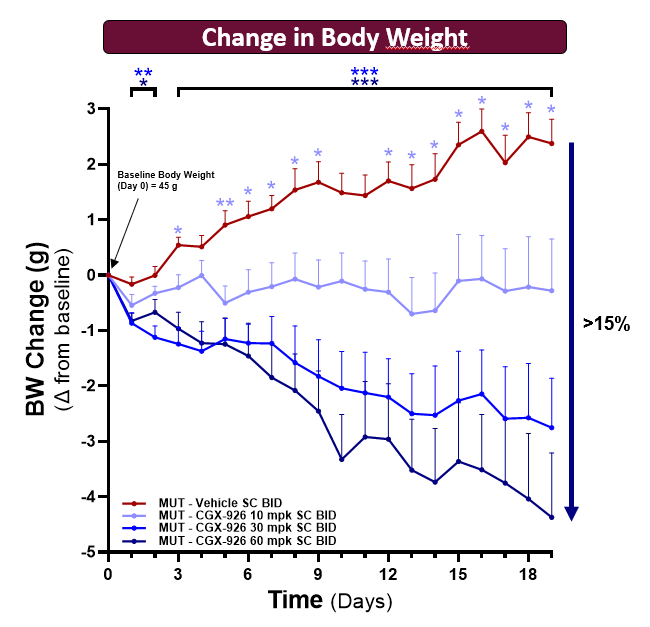
CGX-926 is a first-in-class MC4R-d corrector for the treatment of Genetic Obesity.
- MC4R-deficiency, the most common form of genetic obesity, is associated with severe hyperphagia and obesity, affecting ~100,000 patients in the US.
- MC4R-deficiency is caused by heterozygous and homozygous partial loss-of-function mutations in MC4R that lead to receptor misfolding and impaired trafficking to the cell surface of neurons in the paraventricular nucleus of the hypothalamus.
- CGX-926 is an orally active, small-molecule corrector that restores proper folding, trafficking, and function of mutated MC4R, addressing the root cause of the disease.
- CGX-926 reduces body weight and hyperphagia in a proprietary mouse MC4R-deficient model of obesity and has the potential to address the key clinical manifestations of MC4R-deficient in human patients.

CGX-195 is a first-in-class corrector which has the potential to decrease the risk of liver fibrosis and lung emphysema for the treatment of alpha-1 antitrypsin deficiency.
- Homozygous mutations (E242K) in the SERPINA1 gene, which encodes alpha-1 antitrypsin (A1AT), lead to AATD, affecting ~80,000 to 100,000 patients in the US and causing both liver and lung disease.
- Mutant A1AT protein (Z-AAT) is misfolded and polymerizes in hepatocytes, driving liver disease, while decreased circulating Z-AAT renders the lung susceptible to elastin breakdown and causes lung disease.
- Congruence has discovered orally active small-molecule A1AT correctors that stabilize mutant Z-AAT, prevent its polymerization in hepatocytes, and increases secretion of functional Z-AAT in plasma in cellular assays and a mouse transgenic model of AATD.
- A1AT correctors discovered by Congruence have the potential to decrease the risk of liver fibrosis and lung emphysema in patients with AATD.


GCase Activators for the treatment of GBA-driven Parkinson’s Disease
- Heterozygous mutations in the GBA1 gene, which encodes glucocerebrosidase (GCase), are the most common genetic risk factor for Parkinson’s disease, with a US prevalence of ~100,000 patients.
- GBA1 mutations (including L444P, N370S and E326K) cause GCase misfolding and lysosomal GCase deficiency, which disrupt lipid homeostasis, leading to accumulation and aggregation of alpha-synuclein in dopaminergic neurons.
- Congruence has discovered a series of orally active and brain-penetrant small-molecule pharmacological activators of GCase (e.g., CO-1) that activate lysosomal GCase activity in patient-derived dopaminergic neurons and in a mouse GBA-1 mutant animal model.
- GCase activators and correctors discovered by Congruence have the potential to be disease-modifying and to slow progression of GBA-PD.


Publications
- Collaborative evaluation of in silico predictions for high throughput toxicokineticsJohn F. Wambaugh, Nisha S. Sipes, Gilberto Padilla Mercado, Jon A. Arnot, Linda Bertato, Trevor N. Brown, Nicola Chirico, Christopher Cook, Daniel E. Dawson, Sarah E. Davidson-Fritz, Stephen S. Ferguson, Michael-Rock Goldsmith, Chris M. Grulke, Richard S. Judson, Kamel Mansouri, Grace Patlewicz, Ester Papa, Prachi Pradeep, Alessandro Sangion, Risa R. Sayre, Russell S. Thomas, Rogelio Tornero-Velez, Barbara A. Wetmore, Michael J. Devito
- Congruence Therapeutics: finding a fix for misfolded proteinsMichael Eisenstein
- Quantitative Structure-Activity Relationship (QSAR) modeling to predict the transfer of environmental chemicals across the placentaLaura Lévêque, Nadia Tahiri, Michael-Rock Goldsmith, Marc-André Verner
- AMBER free energy tools: a new framework for the design of optimized alchemical transformation pathwaysHsu-Chun Tsai, Tai-Sung Lee, Abir Ganguly, Timothy J. Giese, Maximilian CCJC Ebert, Paul Labute, Kenneth M. Merz, Jr., and Darrin M. York
- From Protein Sequence to Structure: The Next Frontier in Cross Species Extrapolation for Chemical Safety EvaluationsCarlie A. LaLone, Donovan J. Blatz, Marissa A. Jensen, Sara M.F. Vliet, Sally Mayasich, Kali Z. Mattingly, Thomas R. Transue, Wilson Melendez, Audrey Wilkinson, Cody W. Simmons, Carla Ng, Chengxin Zhang, Yang Zhang